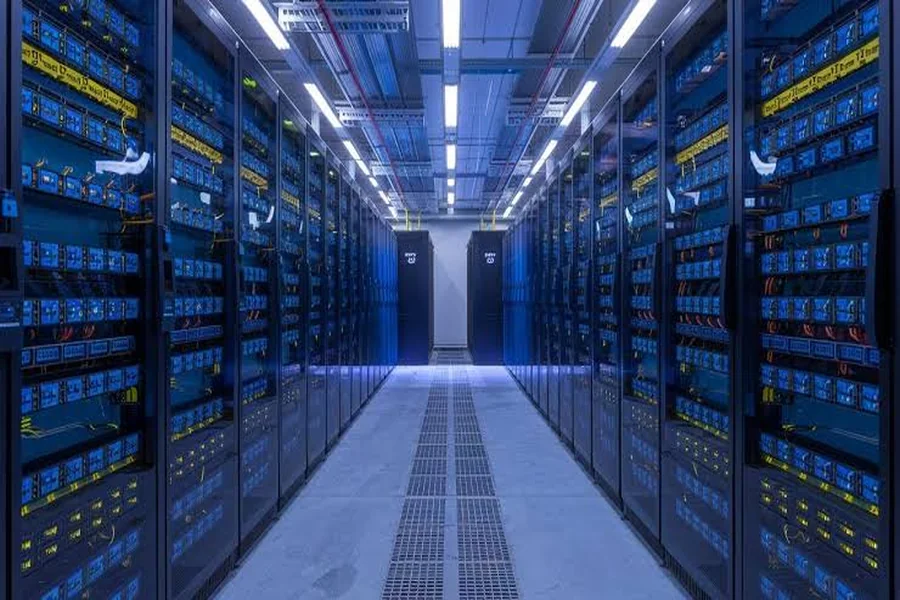
Eight GPUs behave. Sixty-four are manageable. Somewhere beyond that, a training job stops being a computing problem and becomes a distributed-systems problem, and the failure modes change character entirely. Teams operating GPU Clusters at Scale spend surprisingly little of their time thinking about processors and a great deal thinking about communication, coordination, and things that break.
Here is what actually changes as the node count climbs.
Synchronisation makes you as fast as your slowest participant
Most large-scale training is synchronous. Every device computes, then all of them exchange gradients, then everyone takes a step together.
That single design fact drives everything else. One slow node — thermally throttling, sitting on a congested link, hosting a badly placed job — sets the pace for every other node in the run. Thousands of expensive processors wait politely for the laggard.
At small scale, one struggling device barely registers. At large scale, the probability that something is having a bad moment approaches certainty, and the cost of each incident is multiplied by everything waiting.
Which is why the useful metric is not utilisation but goodput: the proportion of your total compute that produced actual progress. Utilisation can look healthy while a large share of those cycles were spent waiting or repeating lost work.
The network becomes the machine
Communication grows with scale, and the fabric between nodes determines whether your accelerators work or idle.
Three things matter. Bandwidth per GPU — the sustained rate each device can actually achieve to the rest of the cluster, not the theoretical port speed. Topology — how nodes connect, which decides whether a collective operation crosses one hop or several. Congestion behaviour — what happens when many flows compete, and whether the fabric handles it gracefully or collapses.
Placement matters more than most teams expect. Two jobs that fit perfectly on paper can interfere badly if they are scattered across the fabric, so scheduling that understands topology is worth real money in recovered throughput.
At scale, failure is a schedule item
Any individual component is reliable. Multiply components by weeks of continuous operation and interruptions become routine rather than exceptional: memory errors, a failed link, a driver problem, a node that stops responding.
The consequence for synchronous training is unforgiving — one lost participant can end the run.
So the engineering discipline shifts toward surviving interruption rather than preventing it.
Checkpoint deliberately. Too rarely and a failure costs hours of progress; too often and you spend your compute writing files. The right interval is a function of your failure rate and your checkpoint cost, and it is worth measuring rather than guessing.
Automate detection and restart. The time between a node dying and the run resuming is pure loss. Manual intervention at 4am is not a strategy.
Monitor for degradation, not just failure. A GPU running slightly slow is more damaging than one that has clearly died, because nothing alerts and everything waits.
Hold spare capacity. Being able to swap in a healthy node immediately turns an outage into a hiccup.
GPU Clusters at Scale change the physical problem too
Each accelerator generation has drawn more power and produced more heat than the last, which has pushed rack density to the point where air cooling reaches its practical limit and liquid cooling becomes the sensible default at the high end.
This is not an abstract concern for anyone specifying a deployment. Power delivery, cooling capacity, and the physical layout of the room now constrain what can be installed and how densely. It is one of the strongest arguments for purpose-built facilities over retrofitted server rooms — and a reason to ask a prospective provider about power and cooling design, not only about hardware.
Feeding the accelerators
A cluster that cannot read data fast enough is an expensive space heater. As you scale, the storage layer and data pipeline become genuine bottlenecks, and the fix is architectural: parallel throughput, sensible caching near the compute, and a pipeline that keeps every device supplied. It is unglamorous work that reliably pays for itself.
Conclusion
Running GPU clusters at scale is less about accelerators than about everything between them. Synchronous training makes you hostage to your slowest node, the interconnect decides whether expensive silicon works or waits, hardware failure becomes a planning assumption rather than an incident, and power and cooling shape what you can physically build. Measure goodput rather than utilisation, checkpoint on evidence rather than habit, schedule with topology in mind, and treat recovery as a first-class feature. The teams that scale successfully are the ones that expected things to break.