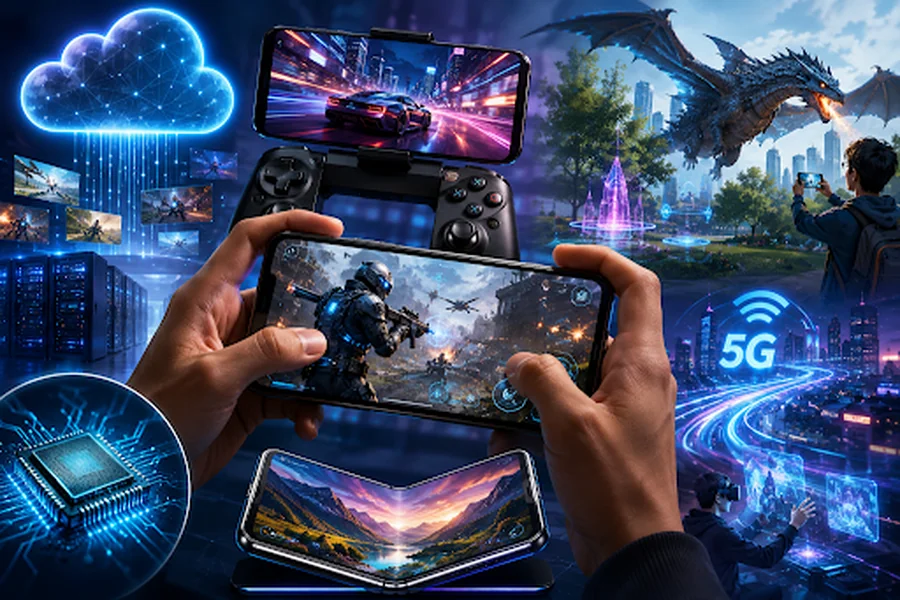
Mobile gaming is one of the fastest-expanding areas of the entertainment industry. The graphics, performance, and online worlds of a game are a lot more advanced than they used to be a few years ago, and modern smartphones can handle that.The development of new software technology innovations and the steady increase in internet speed are continuing to redefine the mobile gaming experience and interactions, including how players play, compete, and communicate.
Most of the improvements in this day and age are not as obvious, but they are readily noticeable in the overall game experience.
Faster Hardware Is Expanding Mobile Gaming
Today’s smartphones are equipped with processors and graphics processors that can run much more resource-intensive games than previous models. Without the need for dedicated gaming hardware, players can now enjoy smoother animation, faster loading times, and more detailed environments.
Key hardware improvements include:
- More powerful CPUs and GPUs.
- Displays with higher refresh rates.
- Faster internal storage.
- Better battery efficiency.
- Improved cooling systems.
Together, these upgrades allow developers to build larger and more realistic mobile games while maintaining stable performance.
Better Graphics With Smarter Technology
Modern game engines support developers in creating realistic lighting, detailed textures, and natural movement without any unwarranted strain on the device. There are also many games that tweak the graphics automatically, enabling high-end and mid-range smartphones to perform the same game with ease.
Consequently, there have been continuous improvements in visual quality, but the games remain accessible to a wider audience.
Cloud Gaming And Artificial Intelligence
Cloud gaming has introduced a new way to enjoy demanding titles. Instead of relying entirely on a phone’s hardware, powerful remote servers process the game and stream it directly to the player.
Its main advantages include:
- Lower hardware requirements.
- Faster updates.
- Access to larger games.
- Easy play across different devices.
Reliable internet remains essential, but expanding 5G networks continue to improve streaming quality.
AI Creates More Dynamic Games
AI is a crucial component of contemporary mobile games. Computer-controlled opponents can respond more naturally, and some systems adjust the level according to the skill of the player.
AI is also used by developers to enhance the quality of game testing, identify cheaters, and optimize matchmaking systems. These tools contribute to a fair game and enhance the overall experience for players. While mobile gaming is rapidly evolving, there is a growing interest in new technologies not only among game studios but also within the broader digital entertainment sector, including Bet22, that is staying on top of the trends that will influence modern interactive experiences.
Augmented Reality And Online Connectivity
Augmented reality (AR) combines digital objects with the real world using a smartphone camera. Instead of replacing reality, it adds interactive elements that players can explore in familiar places.
Popular AR features include:
- Virtual characters in real locations.
- GPS-based adventures.
- Interactive puzzles.
- Outdoor exploration challenges.
This technology helps to motivate players to move while playing and offers a different type of gaming than mobile games.
Meanwhile, faster internet connections have revolutionized the gaming experience with multiplayer options. The faster connections mean less lag time during online games and real-time cooperation with players around the world. Many users on mobile devices can also enjoy the cross-platform features, which enable them to enjoy games with friends on computers and gaming consoles.
The Future Of Mobile Gaming
Mobile gaming tech continues to progress rapidly. Future games will be even more immersive with faster processors, better AI systems, better wireless, and graphics systems. New device formats, such as foldable smartphones and wearable devices, could provide new avenues in the next few years. These innovations benefit both developers and players by creating richer experiences without making games more difficult to access.