
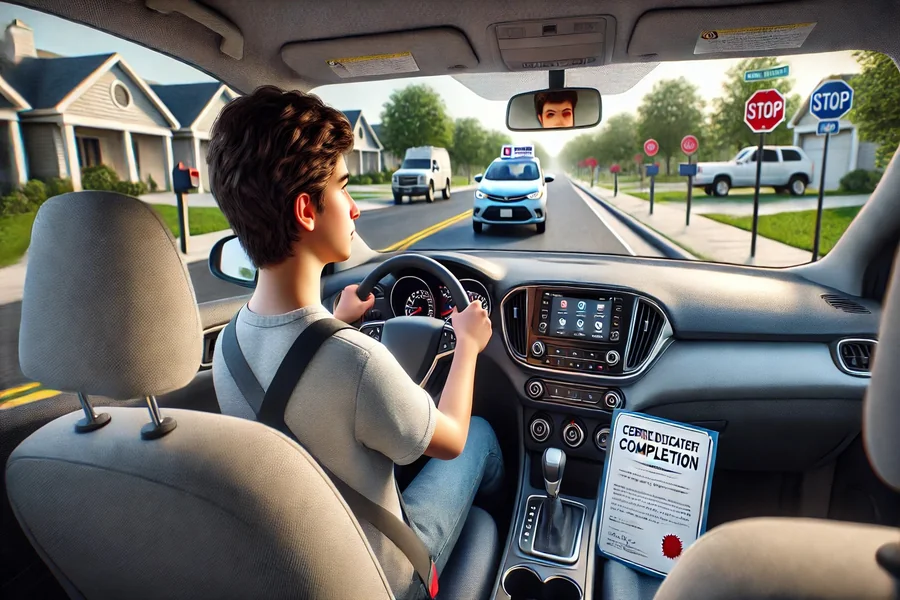
Every year, thousands of accidents occur on roads across the country, many of them involving drivers who weren’t properly taught the knowledge and skills needed to operate a vehicle safely. While factors like distracted driving and impaired driving tend to dominate public conversation about road safety, the foundational role of driver education is still often overlooked. The quality of training a driver receives before they ever get behind the wheel on their own has a lasting effect on how they behave in traffic, how they respond to emergencies, and how much of a risk they pose to everyone around them.
Understanding how gaps in driver education contribute to accidents is not just an academic exercise. For anyone affected by a collision caused by an undertrained or underprepared driver, it is a matter with real legal and financial consequences.
The State of Driver Education
Driver education in the United States varies considerably from state to state. There is no single national standard governing how much training a new driver must complete before receiving a license, which means that a teenager in one state might log significantly more supervised driving hours than a teenager in another before being granted the same legal privilege to drive independently.
In many programs, the curriculum focuses heavily on the mechanics of driving, such as how to brake, merge, and parallel park, while giving far less attention to the cognitive and behavioral dimensions of road safety. These include hazard perception, decision-making under pressure, understanding the effects of fatigue or distraction, and adjusting driving behavior to match road and weather conditions. A driver who knows how to execute a three-point turn but has never been taught to scan intersections for hidden hazards is not fully prepared for the realities of everyday driving.
Several specific shortcomings appear consistently across inadequate driver education programs:
- Insufficient behind-the-wheel hours: Many programs meet only the minimum legal requirements for supervised driving time, which research has repeatedly been proven inadequate for developing automatic, instinctive responses.
- Limited exposure to varied conditions: Drivers who have only practiced in low-traffic, daylight, and dry-weather conditions aren’t prepared for night driving, heavy rain, highway speeds, or dense urban traffic.
- Overemphasis on passing the test: When the goal of driver education is passing the licensing exam rather than producing genuinely capable drivers, the result is a graduate who knows the rules on paper but lacks practical judgment to apply them in real-world situations.
- Inadequate instruction on defensive driving: Defensive driving is one of the most effective tools for accident prevention, yet it receives far too little emphasis in many standard curricula.
Research consistently shows that newly licensed drivers are disproportionately represented in crash statistics, and that the elevated risk persists for years after receiving their license. The early driving years are when the habits formed during education, both good and habit, are reinforced and solidified.
How Poor Training Translates to Real-World Accidents
The connection between inadequate driver education and road accidents plays out in specific, recurring patterns on roads every day.
Drivers who were never taught to properly manage following distance, for example, are more likely to rear-end vehicles ahead of them when traffic slows unexpectedly. Those who lack training in recognizing and responding to hydroplaning are more likely to lose control on wet roads. Drivers who were never coached on the dangers of blind spots are more likely to cause sideswipe collisions during lane changes. In each of these cases, the accident is the product of a training process that failed to build necessary skills.
Young and newly licensed drivers bear a disproportionate share of this risk, but inadequate education is not exclusively a youth issue. Adults who learned to drive decades ago may have developed habits that were never corrected, or may have learned in informal settings from a parent or older sibling without any structured instruction at all. Immigrant drivers who were licensed in other countries and are now navigating American roads may also face knowledge gaps around local laws, signage, and traffic norms.
Commercial drivers present another dimension of this problem. When trucking companies or other employers place drivers on the road without ensuring adequate training and certification, the results can be catastrophic. Large commercial vehicles require a distinct set of skills, and the consequences of error at highway speeds with tens of thousands of pounds of weight involved are far more severe than those of a typical passenger vehicle crash.
In all of these scenarios, the common thread is that many preventable accidents happen because a driver lacked knowledge or skills that proper training could have provided.
When Inadequate Training Becomes Negligence
From a legal standpoint, inadequate driver education is directly relevant to questions of liability and negligence.
When a driver causes an accident due to a lack of basic competency, such as failing to yield, misjudging a gap in traffic, or losing control of a vehicle in conditions they were never trained to handle, their inadequate preparation may be central to understanding who bears responsibility for the harm caused. This is particularly true in cases involving commercial drivers, where employers have a legal obligation to ensure that the people they put behind the wheel receive proper training and qualification. When an employer fails to meet that standard and an accident results, liability may extend well beyond the driver themselves.
Even in accidents that do not involve commercial vehicles, documentation of a driver’s training history, licensing record, and prior violations can be meaningful in building a complete picture of what happened and why. Speaking with a car accident lawyer can help clarify what evidence may be relevant and what legal options are available. If you are able to file a lawsuit, you may be able to recieve compensation for car accident damages and injuries you have experienced.
A Broader Case for Raising Standards
Graduated licensing systems, which phase in driving privileges over time as new drivers accumulate experience, have shown measurable results in reducing crash rates among young drivers, and their continued expansion and strengthening is supported by road safety researchers. Mandatory training in defensive driving techniques, hazard perception, and adverse-condition driving would meaningfully improve the preparation of new drivers across the board.
Until standards improve, however, undertrained drivers will continue to share the road with everyone else, and the consequences of that reality will continue to show up in accident reports, emergency rooms, and courtrooms. For those affected, understanding the role that inadequate driver education may have played in a crash is an important step toward both accountability and recovery.